
Rotary Depositor Drop Chocolate Line
The ALPY Rotary Depositor Drop Chocolate Line is a state-of-the-art production system developed for the high-capacity manufacturing of premium chocolate and compound products. Combining innovative rotary depositing technology with precision engineering, it delivers perfectly uniform drops, buttons, sticks, chunks, and other deposited products with exceptional consistency and productivity.
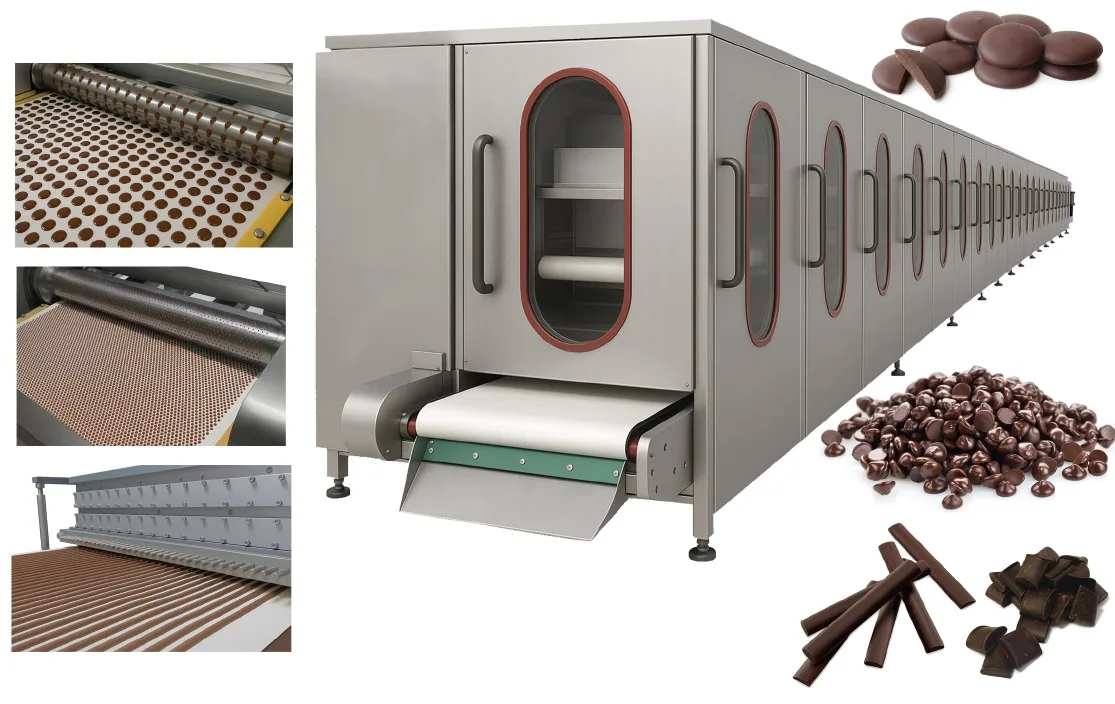
Specifications
| Model | Capacity | Note |
|---|---|---|
| ARD-800/300 | 300 kg/h | — |
| ARD-800/500 | 500 kg/h | — |
| ARD-800/1000 | 1,000 kg/h | — |
| ARD-800/2000 | 2,000 kg/h | — |
Since 2015, ALPY has built Rotary Depositor Drop Chocolate Lines, with more than 40 complete production lines now running for professional chocolate producers worldwide.
PID Control System
Every depositor runs on the ALPY PID Control System, which regulates temperature and pressure automatically as the line runs. It keeps the deposit precise and repeatable across chocolate and compound masses of different viscosity.
Technical Specifications
| Technical Specification | ARD-800/300 | ARD-800/500 | ARD-800/1000 | ARD-800/2000 |
|---|---|---|---|---|
| Capacity | 300 kg/h | 500 kg/h | 1,000 kg/h | 2,000 kg/h |
| Conveyor Belt Width | 850 mm | 850 mm | 850 mm | 850 mm |
| Depositor Working Width | 800 mm | 800 mm | 800 mm | 800 mm |
| Number of Conveyor Flats | 3 | 3 | 3 | 3 + 1 |
| Number of Cooling Tunnel Flats | 3 | 3 | 3 | 3 |
| Length of One Cooling Tunnel Flat | 7,500 mm | 11,240 mm | 22,440 mm | 23,400 mm |