
Fat Melting Tank
The rectangular melting tank, combined with ALPY's triangular melting coil design, maximizes heat transfer efficiency, ensuring faster, more uniform melting and continuous downstream production.
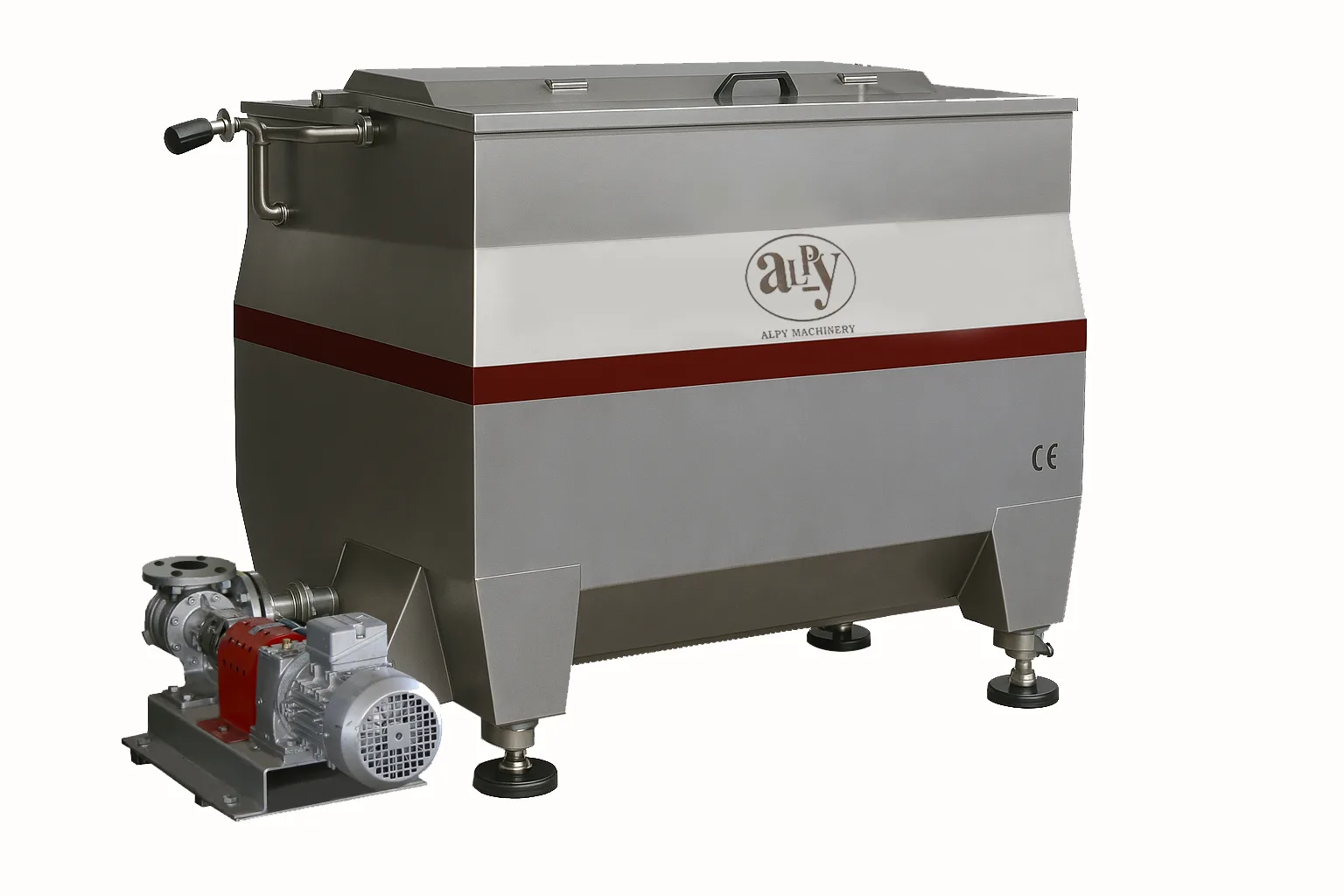
Specifications
| Model | Capacity | Note |
|---|---|---|
| AYT-500 | 500 LT | — |
| AYT-1000 | 1000 LT | — |
| AYT-2000 | 2000 LT | — |
The triangular melting coil touches the fat blocks on two sides, so heat reaches them from both faces. That melts each block faster than a conventional tank and keeps a steady flow to the next stage.
The rectangular tank fits more blocks onto the coils per load, so you melt a bigger charge at once without a break in downstream production.
Sizing it correctly
Size the melting tank against the batch capacity of your Preparation Mixer — feeding a large mixer from an undersized melter means waiting. Send us your recipe sheet and we will do the arithmetic with you.
Frequently Asked Questions
Why does the Alpy tank melt faster than a conventional cylindrical tank?
The tank is rectangular, so it holds more blocks per charge, and the melting serpentines have a triangular profile that contacts the fat blocks from two sides at once — twice the heated contact surface per serpentine.
What tank sizes are available?
Three sizes: 500, 1,000 and 2,000 litres.
How do I choose the right size?
Size the melting tank against the batch capacity of your preparation mixer. Feeding an AOK-1500 from a 500-litre melter means waiting, so the tank should keep pace with how much fat your recipes consume per shift.